One Plastic Bag: Isatou Ceesay and the Recycling Women of the Gambia
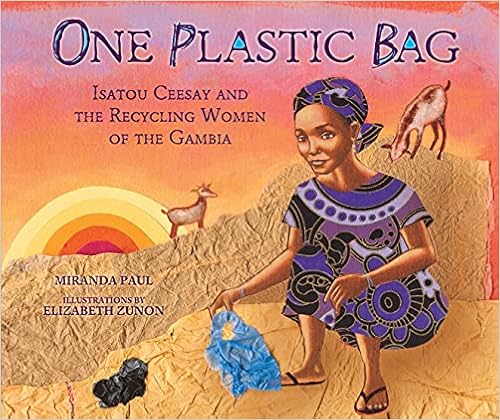
The inspiring true story of how one African woman began a movement to recycle the plastic bags that were polluting her community.
Plastic bags are cheap and easy to use. But what happens when a bag breaks or is no longer needed? In Njau, Gambia, people simply dropped the bags and went on their way. One plastic bag became two. Then ten. Then a hundred.
The bags accumulated in ugly heaps alongside roads. Water pooled in them, bringing mosquitoes and disease. Some bags were burned, leaving behind a terrible smell. Some were buried, but they strangled gardens. They killed livestock that tried to eat them. Something had to change.
Isatou Ceesay was that change. She found a way to recycle the bags and transform her community. This inspirational true story shows how one person's actions really can make a difference in our world.
Reviews (87)

WHY I LIKE THIS BOOK
WHY I LIKE THIS BOOK: One Plastic Bag has so many hooks. First, Miranda incorporates Gambian culture and language into the text, immersing the reader into Isatou’s world. Second, the book has great read aloud-ability. Miranda uses a repeating refrain: “first one, then two, then ten,” which makes kids want to chant along. Finally, who can resist a story about one person seeing an insurmountable problem and taking a small step that leads to a giant change? RESOURCES/ACTIVITIES: One Plastic Bag‘s Web site is packed with activities and information, including a PowerPoint about The Gambia and instructions for turning plastic bags into purses.

Inspiring true story, eloquently told and gorgeously illustrated
This gorgeously illustrated true story shows how Isatou Ceesay and other women in her small village in the Gambia solved a big problem: discarded plastic bags, which were killing livestock and providing breeding places for disease-carrying mosquitos. She and her friends cleaned the bags, cut them into long continuous strips (you can find directions on how to do this online--many places call it "plarn" for "plastic yarn"), and crocheted them into change purses, which now they sell, both locally and abroad. Author Miranda Paul has spent many years teaching in the Gambia and is a founder of the We Need Diverse Books movement, and illustrator Elizabeth Zunon has also illustrated The Boy Who Harnessed the Wind, the story of William Kamkwamba, who taught himself to build a windmill to provide his village with electricity. It's a great read--highly, highly recommended.

Great Message
A book with a great message. We used this book in summer camp with elementary school aged children. They grasp the context and message well. Then we challenged them to create something out of plastic bags as well. It was a great activity that tied in with the book!

Great book for teaching problem and solution text structure!
I love how this story has so many powerful messages. It starts with one plastic bag that no one is concerned about and evolves into a story about taking care of our planet, women being problem solvers, and that we are able to do far more when we band together than we ever are able to do on our own.

Recycling, Resourcefulness, and Personal Growth are Featured in this Biographical Story
Recycling, resourcefulness, and personal growth are featured in this biographical story about a woman that helps clean up her community, make money doing it, and further give back to her community.

Isatou brings change by gathering her friends to clean the bags and weave them into beautiful purses. Selling the purses earns m
Miranda Paul chronicles the inspirational journey taken by Isatou Ceesay. Isatou takes it upon herself to collect discarded plastic bags and recycle them. These bags pooled water bringing mosquitoes and disease. Livestock died from eating the bags and gardens choked on them. Isatou brings change by gathering her friends to clean the bags and weave them into beautiful purses. Selling the purses earns money to replace dead livestock and build a healthy community. Elizabeth Zunon's vibrant illustrations depict the amazing transformation made by one woman's mission to save her village.

The Journey of Self-Sufficiency Begins with "One Plastic Bag"
A wonderful book. I served with the Peace Corps volunteer mentioned in the book. I love the illustrations and the simple and powerful explanation of the project. The story of Isatou identifying the problem of plastic bag litter and then her creating an effective solution was inspiring. I even started a similar project in my village after being trained by Peggy! I highly recommend this timely and engaging book.

I LOVE the fact that the women's group is flourishing like ...
I have to admit that I am partial to this book. I was actually serving in Peace Corp in The Gambia when Peggy (mentioned in book) was also serving. Peggy is the one that started the women's group that this book is written about. I LOVE the fact that the women's group is flourishing like it is😊

Nice story
I crochet so I like it was about crocheting from strips of plastic bags. I like that it was beautifully illustrated and multicultural.

There are so many things I love about this book
There are so many things I love about this book. First, the story about an incredible woman who used her vision and intelligence to start an enterprise that teaches young woman so many skills. Then the way the story is told by a very gifted writer. And to top it off, the illustrations are beautiful. This books transcends age and gender and race, it will appeal to any audience, and can be used with young children to teach them early the importance of recylcling and protecting our environment everywhere.


Comments
Post a Comment